

Update Your NC Home Service Website | Ozlon
Web Design, Contractors, North Carolina, Lead Generation
Is Your NC Home Service Website Stuck in 2018? | Ozlon
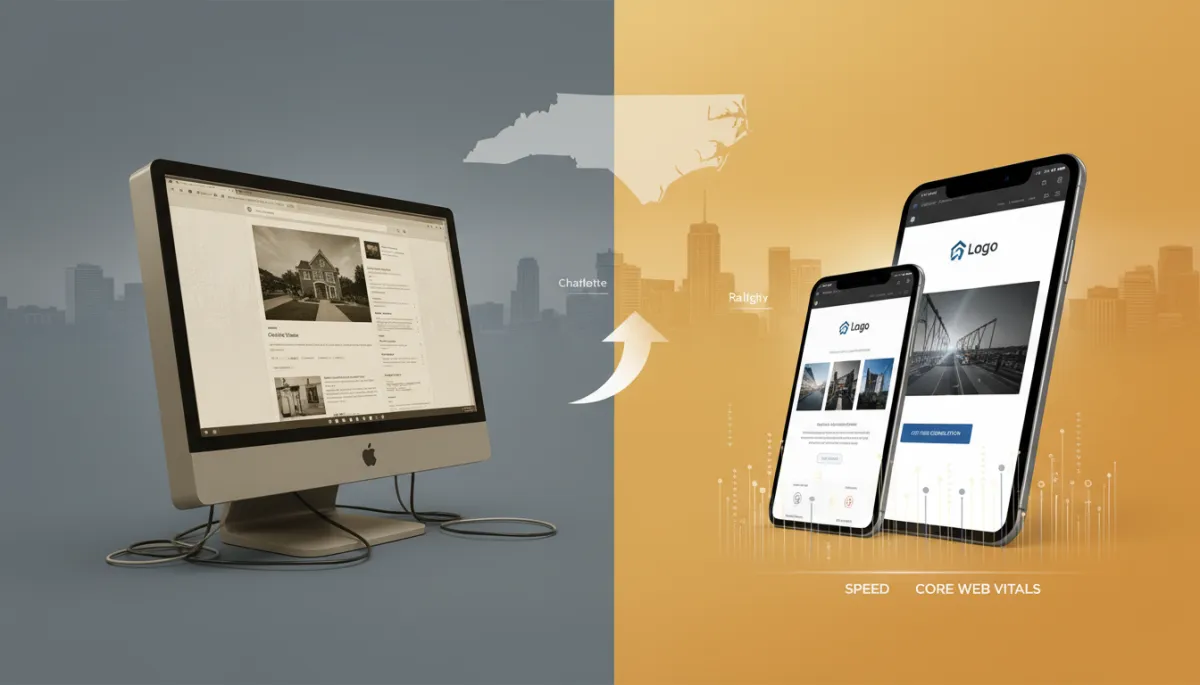
If you run a contracting or home service business in North Carolina and your website hasn’t changed much since 2018, it’s quietly costing you trust, leads, and local market share in Charlotte, Raleigh, and beyond. This guide explains why—and what to do about it now.
The Legacy Problem: When “Good Enough” Is Quietly Killing Your Growth
Many North Carolina contractors launched their websites between 2012 and 2018. At the time, a simple desktop-friendly site with a few photos and a contact form felt like a win. But the web—and homeowner expectations—have moved on. What used to be “good enough” has become a legacy problem that holds your business back every single day.
Legacy websites typically share the same issues: slow load times, cluttered layouts, tiny text on phones, outdated branding, and missing trust signals. On paper, you still “have a website.” In reality, that site is acting more like a leaky bucket than a lead-generating asset. Every time a Charlotte homeowner taps your Google listing and lands on that old site, they’re making a judgment in seconds about whether to call you—or hit the back button and try a competitor with a cleaner, faster, more modern presence.
📌 Key Takeaway: A legacy site doesn’t just look old; it signals that your business may operate the same way—slow to respond, behind on best practices, and potentially less reliable.
How Outdated Websites Harm Trust With NC Homeowners
Trust is everything in contracting. A homeowner in Ballantyne or North Raleigh is about to invite you into their home, hand over thousands of dollars, and rely on you for safety and comfort. They need to feel confident before they ever pick up the phone. Your website is often the first serious trust checkpoint—and an outdated one quietly fails that test.
Old design = old operations. A site that looks like it hasn’t been updated in years suggests your processes, tools, and workmanship might be just as dated, whether that’s true or not.
Broken or tiny mobile layout. When homeowners have to pinch and zoom, buttons are too small, or forms don’t work on mobile, they assume communication and follow-through will be just as frustrating.
Lack of fresh content. If your last project photo is from 2019 and you have no recent reviews or updates, visitors wonder if you’re still active—or if you’re simply not proud of your recent work.
In markets like Charlotte and Raleigh, where homeowners can compare three or four contractors in just a few minutes on their phones, the contractor with the most modern, trustworthy digital presence often wins the call—even if everyone has similar experience and pricing.
The Lead Generation Gap: Why Your Website Isn’t Filling Your Calendar
Your website should be your best salesperson—working 24/7, qualifying visitors, and turning them into booked estimates. But legacy contractor sites rarely behave that way. They function more like digital brochures, not lead-generating assets. The result is a widening lead generation gap between you and competitors who have invested in modern, conversion-focused design.
No clear calls to action. Buttons like “Request a Quote” or “Schedule Service” aren’t visible above the fold, especially on mobile, so visitors don’t know what to do next.
Cluttered or confusing forms. Long, poorly designed forms scare off busy homeowners in South End or North Hills who just want a quick estimate request from their phone during lunch.
No follow-up paths. There’s no clear way to download a guide, view FAQs, or learn about financing—so potential customers leave with unanswered questions and call someone else.
Modern, conversion-focused web design for contractors flips this script. It treats every page as an opportunity to capture a lead—through strategically placed CTAs, fast loading, and content that answers the exact questions NC homeowners are asking before they call.
💡 Subtle CTA: If your website is getting traffic but your phone isn’t ringing, it may be time for a focused website performance and lead audit.
Local Market Competitiveness: Charlotte & Raleigh Have Moved On
Charlotte and Raleigh are two of the fastest-growing metros in the country. That growth has attracted national franchises, aggressive regional players, and tech-savvy local contractors who understand that digital presence is a competitive weapon. They are not relying on 2018-level websites. They are investing in speed, SEO, and branding that makes them look like the obvious choice in local search results and on mobile screens.
Their sites load fast, pass Core Web Vitals, and are designed mobile-first so homeowners can request service in seconds from a phone.
They showcase local projects in neighborhoods like Myers Park, NoDa, Cary, and Brier Creek, reinforcing that they understand the local housing stock and climate.
They integrate Google reviews, badges, and certifications where visitors can see them instantly, strengthening trust and improving click-through rates from Google Maps and local results.
In this environment, keeping a legacy website is effectively choosing to lose a portion of the market by default. To dominate locally, you need a site that doesn’t just stand beside your competitors—it outperforms them in visibility, clarity, and conversion.

Contractors who modernize their sites see measurable lifts in calls, forms, and booked jobs.
Mobile-First vs. “Responsive” Design: Why the Difference Matters in 2026
Many contractors believe they are covered because their site is “responsive”—it technically shrinks to fit a phone screen. But in 2026, that’s not enough. Industry data shows that mobile devices account for roughly 63–68% of web traffic, and Google now indexes and evaluates sites primarily on their mobile version. Mobile isn’t an afterthought; it’s the main stage.
Responsive design usually starts with a desktop layout and then shrinks it down. The result? Cramped navigation, tiny buttons, and heavy desktop assets loading on mobile. By contrast, mobile-first website design starts with the phone experience and builds up from there. This approach is now considered the baseline expectation, not a bonus feature (see mobile-first analyses from Verlúa and others).
Mobile-first: Designed around thumb reach, tap targets, and fast loading on cellular connections. CTAs and navigation are placed in the bottom 40% of the screen, where thumbs naturally rest, and touch targets follow recommended sizes (around 44–48px).
Old responsive: Menus hide behind tiny hamburger icons, content stacks awkwardly, and users must scroll past large banners and sliders before they reach your phone number or contact form.
Studies show that sites built mobile-first can achieve up to 35% higher conversion rates and significantly lower bounce rates compared to desktop-first designs. For a Charlotte roofer or Raleigh HVAC company, that can mean dozens of additional monthly inquiries—without spending more on ads.
💡 Subtle CTA: If your “responsive” site still feels clunky on a phone, consider a true mobile-first redesign through an experienced partner like Ozlon’s web design services.
Speed and Core Web Vitals: The New Baseline for Visibility and Conversion
Speed is no longer just a technical detail your developer worries about. It’s a direct driver of leads and revenue. Research shows that every extra second of mobile load time can cost 7–12% in conversions. For service businesses, that’s fewer calls, fewer form fills, and fewer booked jobs—especially from impatient users on smartphones.
Google’s Core Web Vitals formalize speed and stability into three key metrics: Largest Contentful Paint (LCP), Interaction to Next Paint (INP), and Cumulative Layout Shift (CLS). As of 2026, these are stable, well-defined measures:
LCP: How quickly the main content appears. Good is ≤ 2.5 seconds on mobile.
INP: How responsive your site feels when users tap or click. Good is ≤ 200ms.
CLS: How much your layout jumps around as it loads. Good is ≤ 0.1.
While Core Web Vitals are only one part of Google’s ranking system, they act as important tie-breakers and influence user behavior. Fast, stable sites reduce bounce rates and keep potential customers engaged long enough to call or request a quote. Yet, industry reports suggest that only about half of mobile sites currently pass these metrics—meaning there is a real opportunity for contractors who take performance seriously.
Modern platforms and techniques—optimized images (WebP/AVIF), edge rendering, lean JavaScript, and careful handling of third-party scripts—can dramatically improve Core Web Vitals. When paired with a mobile-first layout, they create a site that feels instant and effortless for users in Charlotte, Raleigh, and across North Carolina.
Modern Branding: Looking Like the Contractor Homeowners Want to Hire
Branding is more than a logo on your truck. In a digital-first buying journey, your website is where your brand either clicks with a homeowner—or doesn’t. Modern branding for contractors in North Carolina means:
Clean, neutral visuals. Simple color palettes, strong typography, and plenty of white space that feel professional and calm, not loud or chaotic. This aligns with current “content-first minimal” design trends seen across leading brands.
Consistent identity. The same colors, fonts, tone of voice, and photography style across your website, Google profile, social media, and print materials. This repetition builds recognition and trust.
Local proof. Before-and-after galleries, project highlights, and testimonials from recognizable neighborhoods and suburbs around Charlotte and Raleigh, showing that you understand local homes and codes.
When your branding feels current and cohesive, homeowners subconsciously associate your business with professionalism and reliability. That perception often matters as much as the actual quote they receive—especially when they are choosing between three similar bids.
💡 Subtle CTA: If your logo, colors, and website feel like they came from different eras, a unified redesign through Ozlon’s contractor-focused web design can bring them together into a single, powerful identity.
Trust Signals: Turning Skeptical Visitors Into Confident Leads
Even with great branding and speed, homeowners still need proof. Modern contractor websites use trust signals strategically to reassure visitors and nudge them toward action. These elements are especially important for first-time visitors who found you through search or Google Maps and don’t yet have a personal referral.
Reviews and testimonials. Pull in Google reviews, highlight 5-star feedback, and include short testimonial quotes with photos where possible. Place them near CTAs and service descriptions, not buried on a separate page.
Certifications and memberships. Display badges for licenses, manufacturer certifications, BBB ratings, and local trade associations. These reassure homeowners that you are vetted and accountable.
Clear guarantees and warranties. Spell out what you stand behind—labor warranties, satisfaction guarantees, emergency response times—so visitors know what to expect before they call.
Transparent service areas and pricing cues. List the NC cities and neighborhoods you serve, and offer at least ballpark expectations or “starting at” language so homeowners aren’t left guessing whether you are a fit.
Combined with fast loading and mobile-first layouts, strong trust signals can dramatically increase the percentage of visitors who feel comfortable filling out a form or picking up the phone. They turn a cold click from a Charlotte or Raleigh homeowner into a warm, qualified lead.
Modern Contractor Success Strategies: From Website to Revenue Engine
Leading contractors in North Carolina are treating their websites as systems, not static brochures. They combine modern design, speed, branding, and trust signals into practical strategies that drive measurable results. A few proven approaches:
Service-area landing pages. Create focused pages for key markets like “Charlotte kitchen remodeling” or “Raleigh emergency HVAC repair,” each optimized for local SEO and designed with clear CTAs, testimonials, and project photos from that area.
Quote funnels, not just forms. Use short, step-by-step forms that ask simple questions—type of service, property location, timing—before inviting visitors to schedule a call. This feels easier on mobile and increases completion rates.
Educational content that builds authority. Publish concise guides like “What to Know Before Replacing Your Roof in Charlotte” or “Raleigh Homeowner’s Checklist for a New HVAC System.” This positions you as an expert and improves organic rankings over time.
Ongoing optimization. Monitor analytics, track which pages generate the most leads, and run small tests on headlines, CTAs, and layouts. Incremental improvements can add up to significant revenue gains across a year.
These strategies are far easier to implement on a modern, mobile-first platform than on a patched-together legacy site. That’s why more NC contractors are choosing to rebuild rather than continue to “tweak” a foundation that no longer serves them.
💡 Subtle CTA: Curious what a modern, lead-focused site might cost? Explore transparent options on Ozlon’s pricing page tailored to growing contractors.
Converting an Outdated Site Into a Lead-Generating Asset
The good news: you don’t need to start from zero. Your existing website, domain authority, and content can often be reshaped into a high-performing asset with a structured modernization plan. The key is to move beyond cosmetic tweaks and address the fundamentals:
Audit the legacy problem. Identify slow pages, broken mobile layouts, outdated content, and missing trust signals. Tools like Google PageSpeed Insights and Search Console can highlight performance and Core Web Vitals issues, while a manual review reveals branding and UX gaps.
Redesign mobile-first. Rebuild key pages with mobile users as the primary audience. Simplify navigation, prioritize CTAs within thumb reach, and remove anything that doesn’t directly support trust or conversion.
Optimize for speed and Core Web Vitals. Compress images, streamline scripts, and leverage modern hosting or edge platforms. Aim to pass LCP, INP, and CLS thresholds on mobile to improve both rankings and user experience.
Layer in modern branding and trust signals. Update your visual identity, refine your messaging, and prominently display reviews, certifications, and guarantees where visitors are most likely to see them.
Connect every page to a next step. Whether it’s “Request a Free Estimate,” “Schedule an Inspection,” or “View Financing Options,” make sure every page leads visitors closer to becoming a customer.
With this approach, your website stops acting like a static business card and starts functioning as a predictable, trackable engine for new work. It becomes something you can confidently invest in—because you can see the direct line from traffic to leads to revenue.
Dominating Locally: Why Now Is the Window for NC Contractors
The gap between contractors with modern, mobile-first sites and those with 2018-era legacy sites is widening—but it’s not yet closed. Many of your direct competitors in Charlotte, Raleigh, and surrounding markets are somewhere in the middle: they know they need to improve, but they haven’t made the leap. That creates a window of opportunity for those willing to modernize now.
Capture more organic traffic by aligning your site with current SEO, mobile-first, and Core Web Vitals standards while others lag behind.
Convert a higher percentage of visitors into leads through clear CTAs, trust signals, and fast, frictionless mobile experiences.
Build a recognizable, modern brand that stands out on Google Maps, in local search results, and across referral links and social media.
Contractors who act now don’t just “keep up”—they dominate locally. They become the default choice when homeowners in Charlotte or Raleigh search for their next project, because their digital presence consistently delivers a better experience from the first tap to the final invoice.
💡 Subtle CTA: If you want to use your website as a competitive advantage—not a liability—schedule a no-pressure strategy consultation with Ozlon and see what’s possible.
Final Word: Digital Modernization Is a Revenue Decision, Not a Cosmetic One
If your NC home service website still looks and behaves like it did in 2018, you are leaving real money on the table. Outdated sites erode trust, leak leads, and make it harder to compete in fast-moving markets like Charlotte and Raleigh. Meanwhile, homeowners are doing more research on mobile, expecting instant performance, and choosing contractors whose branding and online experience feel current and reliable.
Modernizing your website with mobile-first design, speed and Core Web Vitals optimization, modern branding, and strong trust signals is not just about looking better. It is about transforming a legacy liability into a lead-generating asset that consistently fills your pipeline with qualified local homeowners. It is about creating a digital presence that works as hard as you do—and scales with your ambitions.
The contractors who will grow fastest over the next few years in North Carolina are the ones who treat digital modernization as a core business investment, not an optional expense. If you are ready to step out of 2018 and into a website that truly supports your revenue goals, explore Ozlon’s web design solutions, review transparent pricing options, and book a consultation. The sooner you modernize, the sooner your website can start doing what it should have been doing all along—helping you win more of the right jobs, from the right customers, in the NC markets you care about most.
