By Ozlon
A property owner reviewing a construction proposal wants more than a gallery of finished buildings. They need to know whether your company handles the right project type, how you work, what information you need, and whom to contact about the next step. A construction website should answer those questions with real project details and a clear inquiry path. For a Charlotte area general contractor, that means showing the scope you take on, the process clients can expect, and proof the company is authorized to share.
What is at stake when the website is thin?
A homeowner or property manager may compare several firms before starting a conversation. A 2025 Home Service Customer Service Report says 96% of surveyed homeowners expect a user friendly, professional website (Housecall Pro, Home Service Customer Service Report, 2025). The survey concerns home service customers, not every commercial construction buyer, and does not guarantee that a polished website wins a contract. It is useful context for treating basic clarity and professionalism as part of the buying experience.
How do you design a site around construction work?
- Define the work you want. Separate residential remodeling, commercial tenant improvements, additions, and other actual services. Explain where your scope begins and ends. Do not imply that you take on structural, licensed, or specialty work unless that is accurate.
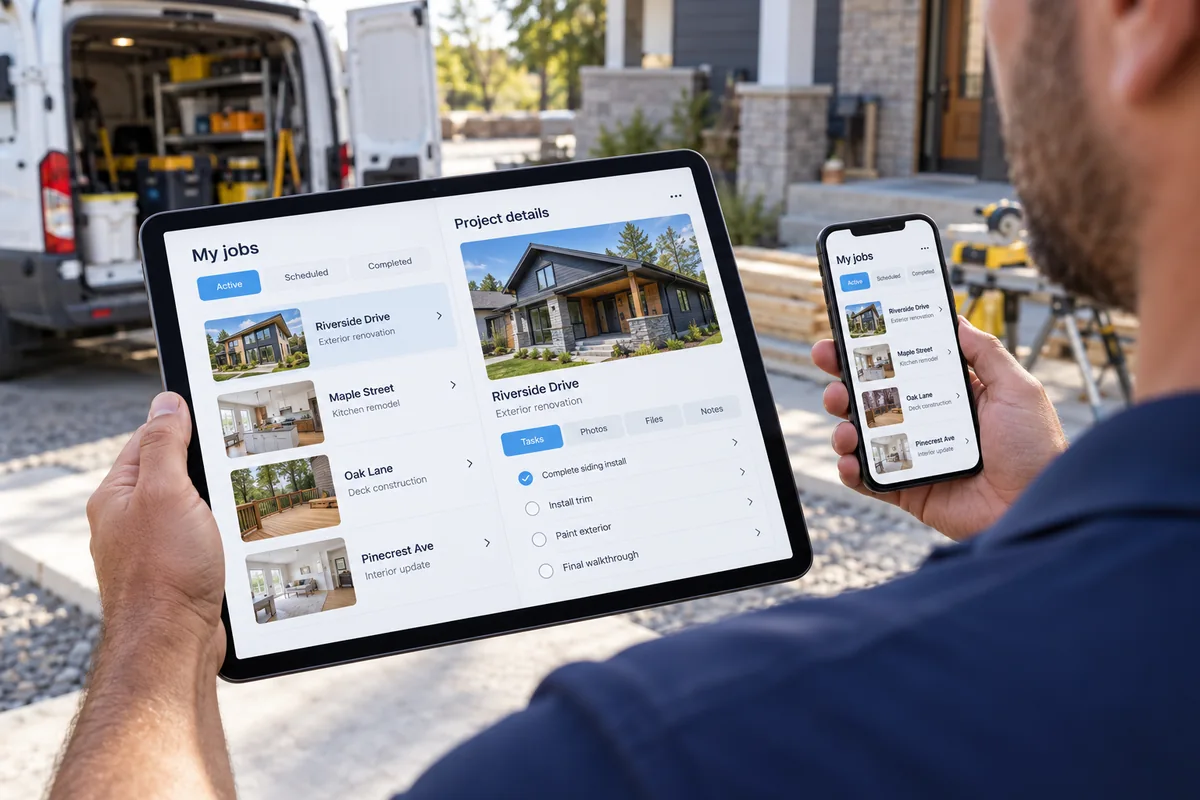
- Build a useful project record. For each project you can share, identify the type of work, location at the level the client approved, your role, and a few useful images. Get permission before publishing property photos or customer names. Do not turn an ordinary project into a result claim you cannot prove.
- Explain the process. Tell prospective clients what you need for an initial discussion, whether site visits are part of evaluation, and how estimates are reviewed. Avoid promising fixed timelines or budgets without an agreed scope.
- Make the next action specific. A commercial inquiry may need project type, location, timing, and plans. A residential remodel request may need a short description and callback details. Ask only what your team uses to decide who should respond.
- Test the path from a phone. Confirm that a visitor can find service information, open the project examples, tap the phone number, and submit the form. Check that the request reaches the right person and that the confirmation does not claim a response time the team cannot meet.
Consider a Charlotte general contractor whose portfolio includes a completed office fit out and a residential addition. A property manager looking for interior improvements should not have to infer that the firm works on occupied commercial spaces from a photo of a house. Give each project a concise, factual description of scope and process. Keep the call to action focused on discussing a project, rather than promising a free estimate or a delivery date unless those terms are verified.
How can a project gallery backfire?
Images without context can leave buyers unsure what your company actually did. A list of client names without permission can create a relationship problem. Generic claims such as best in the region do not explain capability. Pair each image with a plain description, and remove anything the company cannot confirm.
How we decide
We would review which construction services and locations matter, search visibility, mobile speed, calls, missed calls, reviews, form completion, and booking or consultation outcomes. Those records help us see whether visitors need clearer scope, better project context, a shorter inquiry path, or stronger follow up. We would not infer contract value or sales performance from website activity alone.
Frequently asked questions
Should I show every project?
No. Choose work that represents the services you want to discuss and that you have permission to publish. A few well explained examples are more useful than a gallery with no context.
What should a construction inquiry form ask?
Ask for the information your team needs to route the request, such as contact details, project type, location, and a short description. Do not request plans or sensitive documents through an unsecured form without checking the handling process.
Does a professional website guarantee bids?
No. A clear site helps potential clients understand your scope and contact you. It cannot guarantee that a project fits your capacity, qualifications, schedule, or bid requirements.
If your project pages or inquiry process need a closer look, request a free website audit. Review Ozlon's web design service and contractor marketing page to see what support may fit your business.
How this was made: written by the Ozlon team from our own method, with every outside figure checked against its source.